Already a subscriber? Make sure to log into your account before viewing this content. You can access your account by hitting the “login” button on the top right corner. Still unable to see the content after signing in? Make sure your card on file is up-to-date.
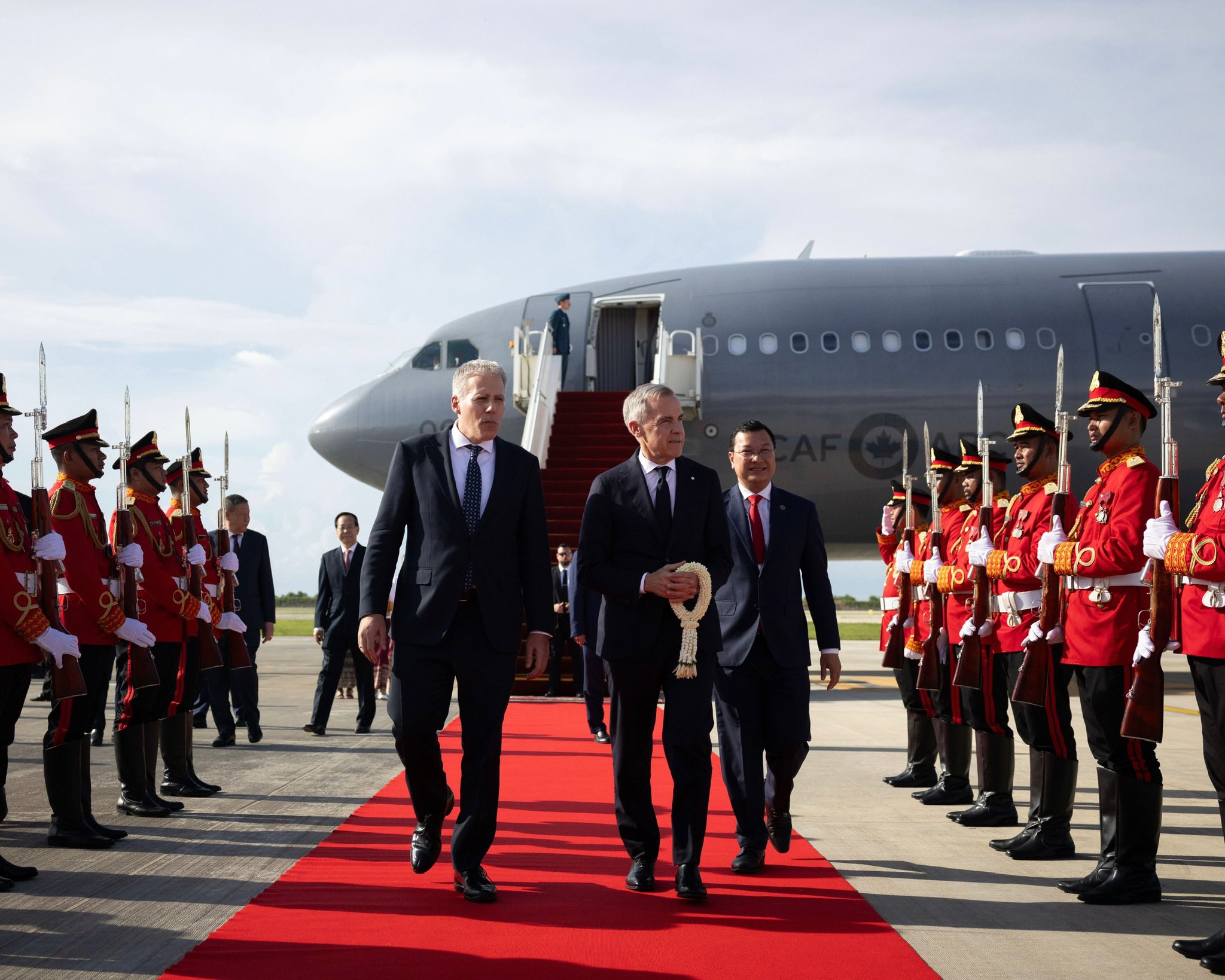
Canadian Prime Minister Mark Carney said Monday that Chinese automakers could be Canada’s backup plan if a deal with President Trump doesn’t keep the US and Canadian auto industries tied together.
Getting into it: At the Francophonie Summit in Cambodia, Carney said striking a deal with the US is still his top goal, but how those talks end could decide whether Canada brings in European, Chinese or Japanese automakers instead. He said Chinese companies would need to actually build in Canada, not just put together parts shipped in from overseas, which means meeting labor standards, growing local supply chains and using Canadian critical minerals.
Carney is set to sit down with Chinese President Xi Jinping in Shenzhen later this week, and auto manufacturing is expected to be on the table.

In January, Canada and China reached a deal that dropped Canada’s tariff on Chinese EVs from 100% to 6.1% and let in as many as 49,000 vehicles a year to start, while Beijing cut tariffs on Canadian farm exports like canola. Trump has since threatened to hit Canada with a 100% tariff if it cuts a deal with China. When reporters asked if he was dangling Chinese investment to get a better deal from the US, Carney said, “It’s not leverage. But action, reaction.”
Ontario Premier Doug Ford, whose province anchors Canada’s car industry, pushed back, saying the government should focus on protecting auto workers, “not undermining them by importing even more state-subsidized cheap Chinese cars.”
This all comes as Canada’s auto sector takes a beating from Trump’s tariffs, and Ottawa recently threatened to take Stellantis to court for moving planned Jeep Compass production out of Ontario and into Illinois. Carney said Saturday that Canada and the US are inching closer to a trade deal, but they still aren’t on the same page on everything.