Already a subscriber? Make sure to log into your account before viewing this content. You can access your account by hitting the “login” button on the top right corner. Still unable to see the content after signing in? Make sure your card on file is up-to-date.
The US officially removed Syria from its state sponsor of terrorism list Monday, ending a designation that had stood for more than four decades.
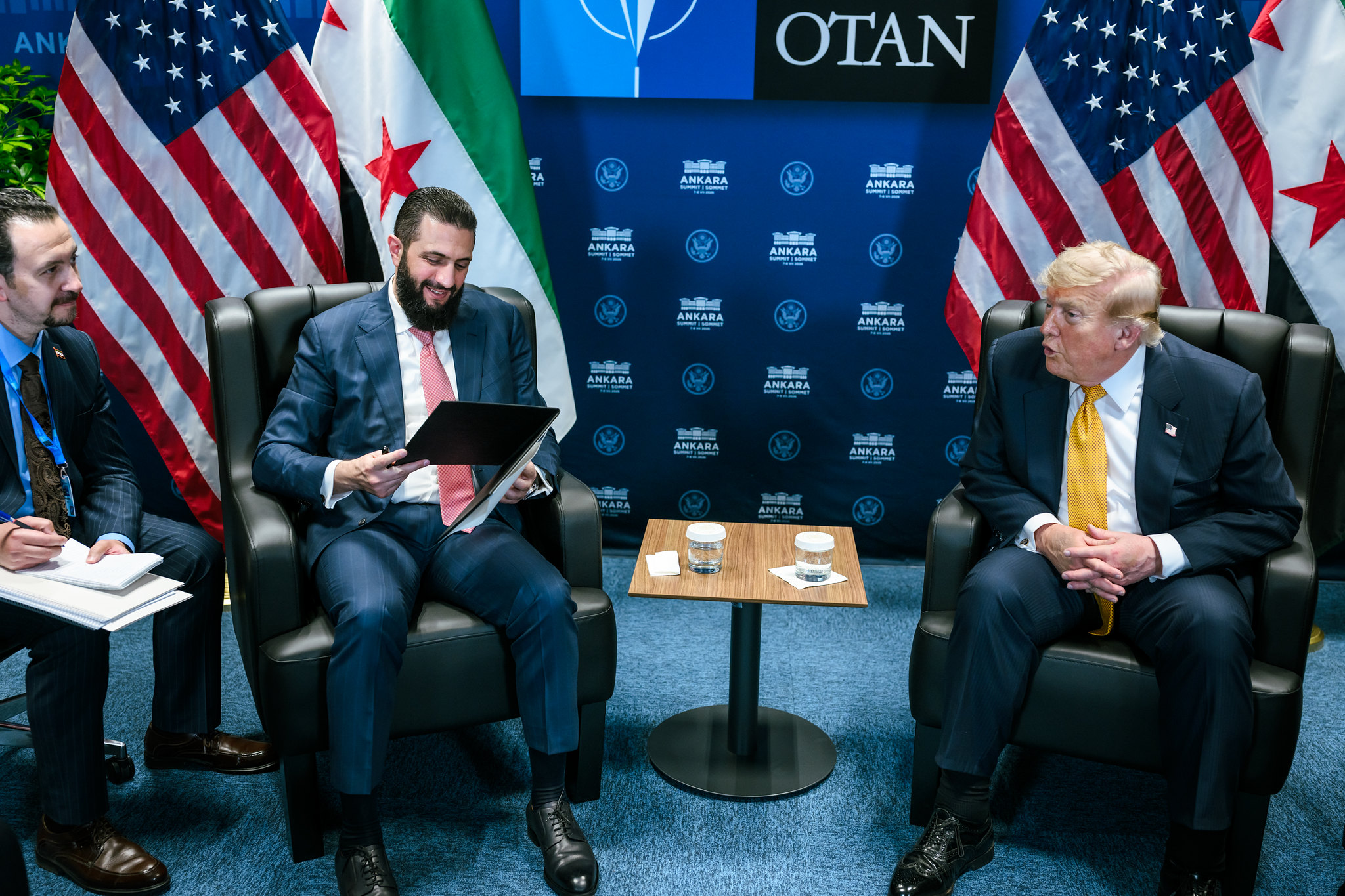
Some shit you should know before you dig in: Syria landed on the list in 1979 when Washington accused Hafez al-Assad’s government of backing militant groups, and it stayed there through his son Bashar’s rule. Rebels led by Hayat Tahrir al-Sham (HTS), the group formerly known as the al-Nusra Front and once al-Qaeda’s Syrian branch, overthrew Assad in December 2024. The group’s leader, Ahmed al-Sharaa, broke with al-Qaeda in 2016 and is now Syria’s president. The US government once had a bounty on al-Sharaa’s head, but he and Trump have built a working relationship that moved fast. Trump wiped out the broad US sanctions program on Syria in July 2025, met al-Sharaa on the sidelines of a NATO summit in Turkey, and wrote to him promising to clear away everything standing between Syria and its rebuild. The terrorism designation was the last one standing, and it kept banks and investors out over compliance risk as the country tries to recover from nearly 14 years of fighting with a death toll human rights groups put north of half a million. The World Bank puts reconstruction costs at $216 billion.

What’s going on now: Secretary of State Marco Rubio announced the delisting Monday. The move cleared a 45-day congressional review window that opened when Trump sent formal notice to lawmakers on July 8. The State Department also revoked HTS’s designation as a specially designated global terrorist organization, and Treasury’s Office of Foreign Assets Control pulled the group from its blocked persons list. Cuba, Iran, and North Korea are the only countries left on the list.
“These actions were all taken in recognition of the positive actions taken and further commitments by the Syrian government under President Ahmed al-Sharaa to fully distance Syria from acts of international terrorism,” Rubio said, adding that the move “eliminates the final major barriers for private sector investment in Syria and promotes Syria’s economic recovery and reintegration into the global economy.”
Treasury Secretary Scott Bessent said the action would “help foster additional investment in Syria to promote political and economic stability,” though the department stressed the relief “does not change Treasury’s posture with regards to countering global terrorism and our commitment to hold bad actors in Syria accountable.”
Trump posted a photo on Truth Social of al-Sharaa and Syrian Foreign Minister Asaad al-Shibani holding his signed executive order. Tom Barrack, US ambassador to Turkey and Syria special envoy, wrote that “capital can replace conflict, enterprise can replace isolation, and commerce can continue to triumph over chaos.”
Al-Shibani called it a “historic milestone” reflecting “the new Syrian state’s commitment to international peace and security,” and had told Reuters Saturday there is “no longer any obstacle to investment, doing business and rebuilding economic life in Syria.” Finance Minister Mohammad Yisr Barnieh called it a “success for Syrian diplomacy,” and central bank chief Safwat Raslan said his institution is “working to build a modern and reliable financial system.”