Already a subscriber? Make sure to log into your account before viewing this content. You can access your account by hitting the “login” button on the top right corner. Still unable to see the content after signing in? Make sure your card on file is up-to-date.
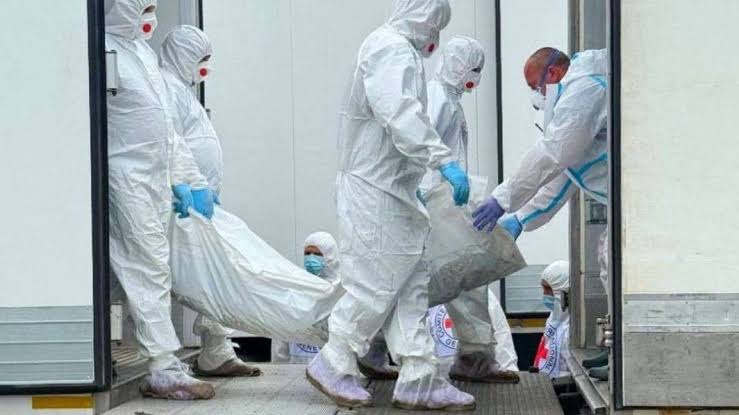
Russia and Ukraine exchanged the bodies of fallen soldiers Thursday, with 261 returned to Kyiv and 24 to Moscow.
Getting into it: Ukraine’s Coordination Headquarters for the Treatment of Prisoners of War said that, according to the Russian side, the bodies returned to Ukraine belong to Ukrainian servicemen. Investigators and forensic experts will now run identification procedures.
The headquarters thanked the International Committee of the Red Cross for facilitating the transfer and credited the Joint Center at the Security Service of Ukraine, the Armed Forces, the Interior Ministry, the human rights commissioner’s office, the Secretariat of the Commissioner for Persons Missing in Special Circumstances, and the State Emergency Service. State Duma deputy Shamsail Saraliev gave the Russian figure to the outlet RBC. Ukraine reports what it receives but does not publish numbers on remains sent back to Russia.

The caveat in that phrasing matters. Kyiv has accused Russia of padding previous repatriations with the bodies of civilians and Russian soldiers, and Ukrainian officials have floated two explanations: that Moscow is trying to avoid paying out to the families of its own dead, or that it just does not care what happens to them.
The exchange came the same week the two sides were publicly fighting over prisoners. Yana Lantratova, Russia’s human rights ombudswoman, said that Ukraine had turned down the next swap, and posted a roster of 497 Ukrainian prisoners and convicted soldiers she described as ready for transfer.
The Coordination Headquarters called that a disinformation campaign. It said Moscow is dragging out the talks and keeping independent medical monitors away from Ukrainian prisoners. The headquarters says it has mapped 200 sites where those prisoners are held, a mix of prisons and what it calls basements, and that the men there are tortured and abused.