Already a subscriber? Make sure to log into your account before viewing this content. You can access your account by hitting the “login” button on the top right corner. Still unable to see the content after signing in? Make sure your card on file is up-to-date.
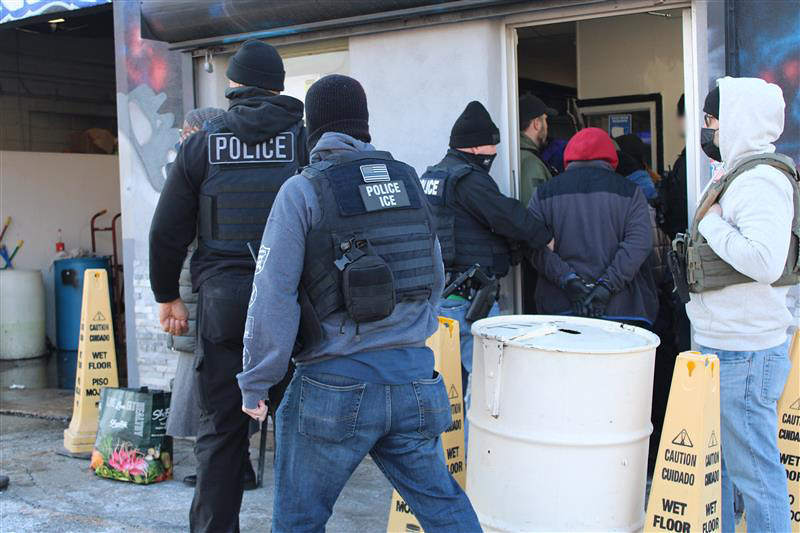
A top Immigration and Customs Enforcement official has confirmed that every officer and agent in the field will be wearing a body camera by the end of August.
Getting into it: Acting Director David J. Venturella put that date on the record Saturday, calling the rollout ahead of schedule and saying ICE is “committed to transparency and accountability.” The statement responded to an Associated Press report on how narrowly the agency plans to hand footage over to the public.
Venturella said the AP “fundamentally mischaracterized ICE’s body-worn camera policy by conflating the expedited release of footage following a serious bodily injury or death in custody with ICE’s broader authority to release body-worn camera footage,” adding that it “is not appropriate to release footage when doing so could compromise investigations or privacy.”

The AP pushed back, saying its report “did not say the provision governs every release of body-camera footage” and that it focused on the most consequential incidents, those involving serious injury or death.
This all comes after a directive issued in February 2025 laid out how the agency handles the footage. Officers must activate cameras during routine enforcement, including arrests, search warrants, and emergency responses. Once an officer shoots someone or a confrontation turns serious, the recording goes to a panel of senior ICE officials and agency lawyers, who decide what to recommend, generally within 72 hours. The policy allows ICE to expedite publication when release is in the “best interests of the agency,” and lets the director withhold or indefinitely delay footage if “specific and compelling circumstances” justify it.
Despite this, it does not define those circumstances, and ICE did not answer AP questions about how it would decide. Any footage that does come out must have officers’ faces, names, and badge numbers redacted.
Related posts:
 Updates From Middle East
 A Deep Dive: Influencers and “Independent” Journalists on Both Sides Being Paid to Advance Political Talking Points
 ICE Arrests Roughly 800 Illegal Immigrants During Four-Day Joint Operation with Florida Law Enforcement
 ICE Drops Age Restrictions for New Hires in Effort to Hire More Officers