Already a subscriber? Make sure to log into your account before viewing this content. You can access your account by hitting the “login” button on the top right corner. Still unable to see the content after signing in? Make sure your card on file is up-to-date.
The Pentagon has announced multiple agreements with major US defense contractors to rapidly expand missile defense and munitions production amid supply issues generated by the ongoing conflict with Iran.
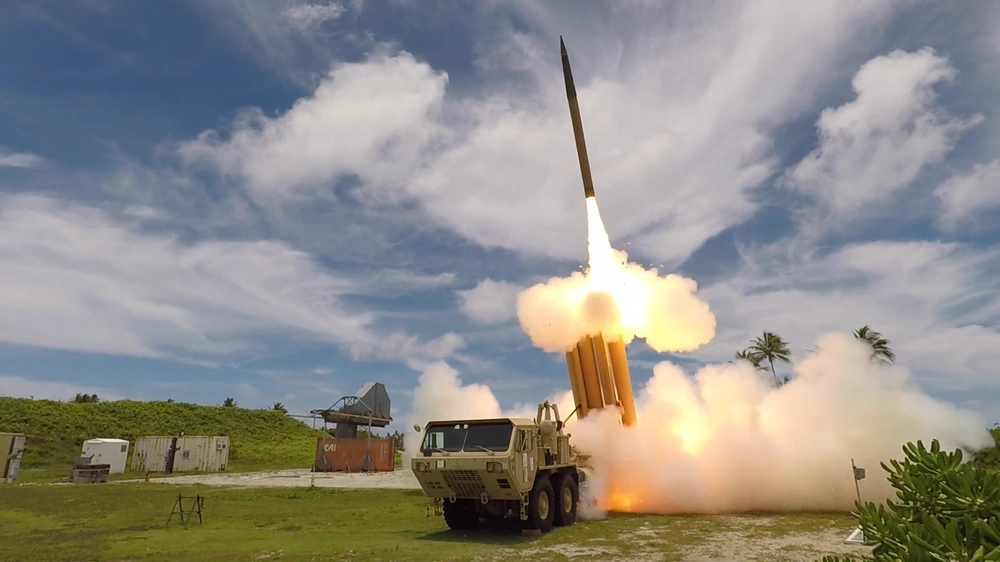
Some shit you should know before you dig in: If you’re unaware, many reports indicate that the United States and key allies in the Middle East are burning through massive quantities of munitions and air-defense interceptors during the ongoing conflict with Iran, with both US forces and partners like Israel relying heavily on systems such as the Patriot missile system and the THAAD missile defense system to counter sustained missile and drone attacks. Multiple reports suggest that demand has been so intense that the US has had to rush additional interceptor stocks and precision munitions into the region to offset rapidly declining inventories, echoing earlier concerns from the brief but intense 12-day confrontation with Iran, during which the US is believed to have expended 25% of its THAAD missile interceptors. Right now, Lockheed Martin produces roughly 96 THAAD missiles a year, averaging one missile every 3 to 4 days.

What’s going on now: The Pentagon has reached a set of long-term “framework agreements” with BAE Systems, Lockheed Martin, and Honeywell aimed at dramatically scaling up production of key missile-defense systems and components. The centerpiece of the announcement is a seven-year deal to 4x production of the infrared seekers used in the THAAD interceptor. These seekers are the “eyes” of the missile, allowing it to detect, track, and precisely hit incoming ballistic threats. This expansion directly supports an earlier agreement (made in January) with Lockheed Martin to increase annual THAAD interceptor production from 96 to 400 missiles, ensuring the supply chain can keep up with that surge.
In simple terms, the Pentagon is guaranteeing steady demand over several years so companies can confidently build new facilities, hire workers, and ramp up production without worrying that orders will suddenly dry up.
Pentagon officials made clear this is about more than just increasing output, it’s about transforming the defense industrial base for sustained, high-intensity conflict. In a statement, Under Secretary of Defense for Acquisition and Sustainment Michael Duffy said, “Securing our supply chain is just as critical as our partnership with the prime contractors.” He added that this will send a “clear, stable, long-term demand signal” to key defense contractors so they can have the financial security “to invest, expand, and hire. This is how we place the industrial base on a wartime footing.”
Each company involved has a specific role in this expansion:
BAE Systems will focus on significantly increasing production of the THAAD infrared seekers, with manufacturing taking place in New Hampshire and New York.
Lockheed Martin, the prime contractor for THAAD, will scale up overall interceptor production and also boost output of other systems like the Precision Strike Missile.
Honeywell will invest $500 million to increase production of critical components such as navigation systems, missile steering controls, and electronic warfare hardware used across a wide range of US weapons.
Related posts:
 Updates From Middle East
 Lockheed Martin Reaches Settlement with DOJ After Being Accused of Inflating Contract Prices for F-35, Will Admit No Wrongdoing
 Pentagon Awards Nearly $8 Billion in Contracts to Acquire Shitloads of Advanced Missiles for US & Allies
 Lockheed Martin & Sikorsky Secure Major Defense Contracts With Pentagon for New F-35s & Helos