Already a subscriber? Make sure to log into your account before viewing this content. You can access your account by hitting the “login” button on the top right corner. Still unable to see the content after signing in? Make sure your card on file is up-to-date.
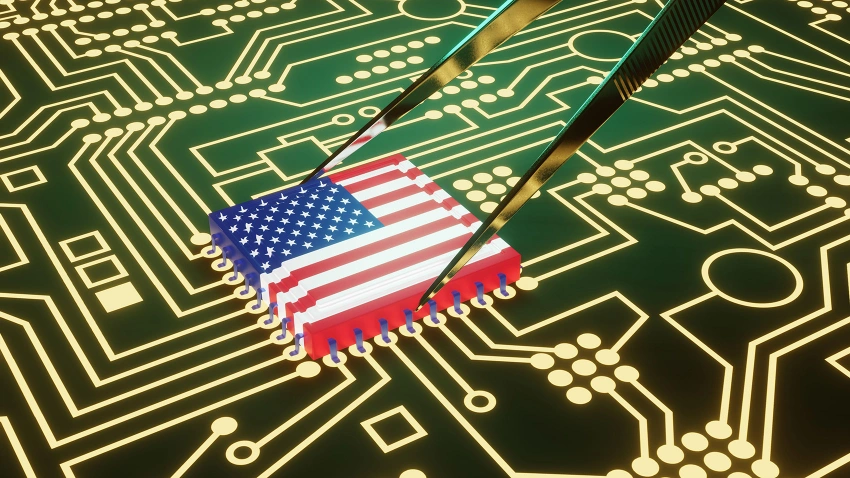
The United States has announced new criminal charges against individuals accused of illegally smuggling billions of dollars’ worth of advanced artificial intelligence technology to China in violation of export control laws.
Some shit you should know before you dig in: For decades, the United States has imposed certain export controls on sensitive technologies to protect national security and maintain a strategic advantage over China. Most recently, these restrictions have expanded to include advanced artificial intelligence chips and systems as they can significantly enhance military capabilities, including surveillance, cyber operations, autonomous weapons, and advanced data analysis. By limiting access, the US aims to prevent these tools from being reverse-engineered, replicated, or integrated into weapons programs that could threaten its interests or those of its allies.

What’s going on now: In a notable development, the Department of Justice unveiled charges against three individuals connected to AI server maker Super Micro Computer: cofounder and executive Yih-Shyan “Wally” Liaw, Taiwan-based manager Ruei-Tsang “Steven” Chang, and contractor Ting-Wei “Willy” Sun. Prosecutors say the three orchestrated a large-scale scheme to illegally send US-made servers (equipped with advanced artificial intelligence chips, often supplied by Nvidia) to customers in China, despite strict export restrictions. While Super Micro itself was not charged, the company said it was informed of the investigation, cooperated with authorities, placed Liaw and Chang on leave, cut ties with Sun, and later confirmed Liaw stepped down from its board.
According to the indictment, the scheme worked by routing shipments through a Southeast Asian company that acted as a middleman. On paper, this company appeared to be the final buyer, placing legitimate orders for the servers. In reality, once the equipment arrived, it was repackaged into unmarked boxes and quietly shipped onward to China. This setup allowed the defendants to mask the true destination of the technology and bypass US export controls that would have otherwise blocked the sales.

To avoid detection, prosecutors say the group used a range of deceptive tactics. They allegedly created fake documents, falsified customer records, and even staged inspections using “dummy” servers (non-functioning replicas meant to trick auditors). In some cases, they reportedly used tools like hair dryers to remove and reattach labels and serial numbers, making it appear as though the real machines were still in approved locations while they had already been shipped abroad. These efforts were designed to mislead both the company’s internal compliance teams and US regulators.
Authorities say the operation was massive in scale, totaling around $2.5 billion in server sales, with hundreds of millions of dollars’ worth of shipments moving in just a few weeks in 2025 alone.
Liaw and Sun have since been arrested in California, with Liaw released on bail and Sun held pending further hearings. Chang has not been arrested and currently has a warrant out for his arrest.
Related posts:
 Updates From Middle East
 Annual US Threat Assessment Again Identifies China as Largest Threat to US National Security, Warns of Growing Military Power
 DOJ Arrests Two Chinese Nationals for Illegally Exporting Millions of Dollars’ Worth of Advanced AI Chips to China
 A Deep Dive: Influencers and “Independent” Journalists on Both Sides Being Paid to Advance Political Talking Points