Already a subscriber? Make sure to log into your account before viewing this content. You can access your account by hitting the “login” button on the top right corner. Still unable to see the content after signing in? Make sure your card on file is up-to-date.
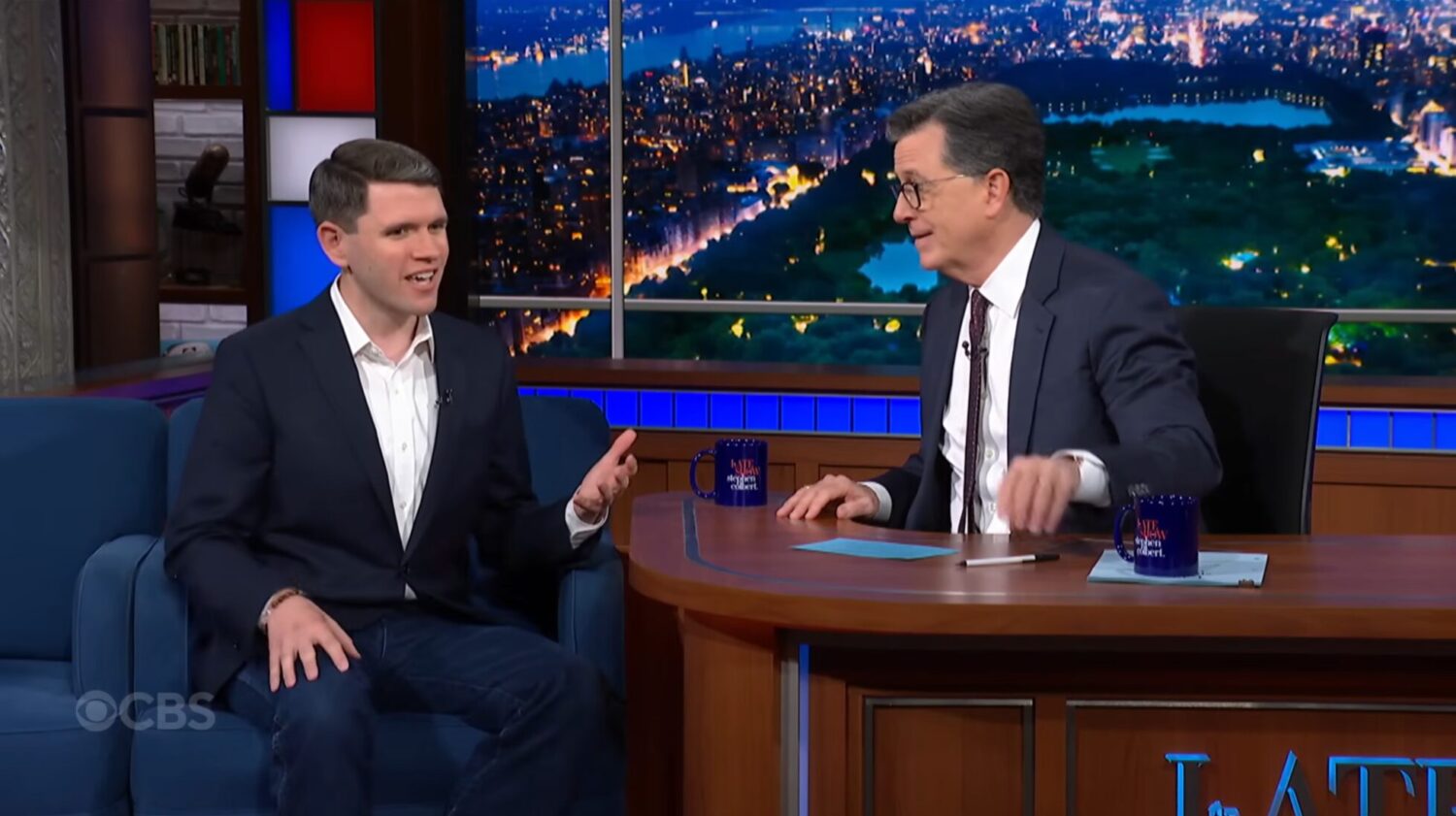
The Chairman of the Federal Communications Commission (FCC) has pushed back against claims that CBS censored Stephen Colbert’s interview with Texas Senate candidate James Talarico.
Some shit you should know before you dig in: Yesterday, Stephen Colbert made headlines after accusing the FCC of effectively pressuring CBS to block his planned interview with Texas Senate candidate James Talarico, claiming the move amounted to political censorship tied to the Trump administration. Colbert said network lawyers told him that the interview could not air, and he suggested the FCC’s recent guidance on the equal-time rule was being used to silence criticism of the president. The equal-time rule, established under the Communications Act of 1934, requires broadcast networks that use public airwaves to provide comparable airtime to all legally qualified candidates for the same office if one candidate is given access. Although news programming has historically qualified for exemptions, recent FCC guidance indicated that late-night talk shows may not automatically receive that protection.

What’s going on now: During a press conference, FCC Chair Brendan Carr rejected Colbert’s accusations, insisting “there was no censorship here at all” and arguing that the commission was simply enforcing existing law. Carr mocked the media reaction, saying it was “one of the most fun days I’ve had on the job watching the hilarity of how this story played out,” and claimed that anyone without “Trump Derangement Syndrome” could see “how it was gonna play out.” He characterized the episode as a calculated stunt, describing it as “a Democrat candidate who understood the way that the news media works and took advantage of all of your prior conceptions to run a hoax apparently for the purpose of raising money and getting clicks,” adding that “the news media played right into it.”
Carr also said that broadcasters have a legal obligation under the equal-time rule, stating, “If you have a legally qualified candidate on, you have to give comparable air time to all other legally qualified candidates, and we’re going to apply that law.” He added that networks had long assumed late-night shows automatically qualified for exemptions and reiterated that the FCC was reminding them of their responsibilities. “Every single broadcaster in this country has an obligation to be responsible for the programming that they choose to air,” Carr said, warning that stations face “potential liability” if they fail to comply.
Despite this, Carr’s comments were met with internal pushback. FCC Commissioner Anna M. Gomez, the commission’s lone Democrat, argued the situation reflected “another troubling example of corporate capitulation in the face of this administration’s broader campaign to censor and control speech.” She added that “the FCC has no lawful authority to pressure broadcasters for political purposes or to create a climate that chills free expression.”