Already a subscriber? Make sure to log into your account before viewing this content. You can access your account by hitting the “login” button on the top right corner. Still unable to see the content after signing in? Make sure your card on file is up-to-date.
Russia has confirmed that it has officially placed its nuclear-capable Oreshnik hypersonic missile system on combat duty in Belarus.
Some shit you should know before you dig in: For years, Russian President Vladimir Putin has touted the Oreshnik hypersonic missile system as a revolutionary advancement in military technology. According to Russian officials, the medium-range ballistic missile can carry multiple independently targetable reentry vehicles (MIRVs), each capable of striking separate targets, and is equipped to deliver either conventional or nuclear warheads. It reportedly reaches speeds of up to Mach 10 and has a range of up to 3,100 miles, making it extremely difficult to intercept. Russia also claims that even in its non-nuclear configuration, the Oreshnik’s kinetic impact could match the devastation of a low-yield nuclear strike. Despite this, Western analysts have raised doubts about the missile’s true capabilities, pointing out the lack of evidence for advanced hypersonic glide vehicles and suggesting its performance may be closer to that of traditional ballistic missile technology.
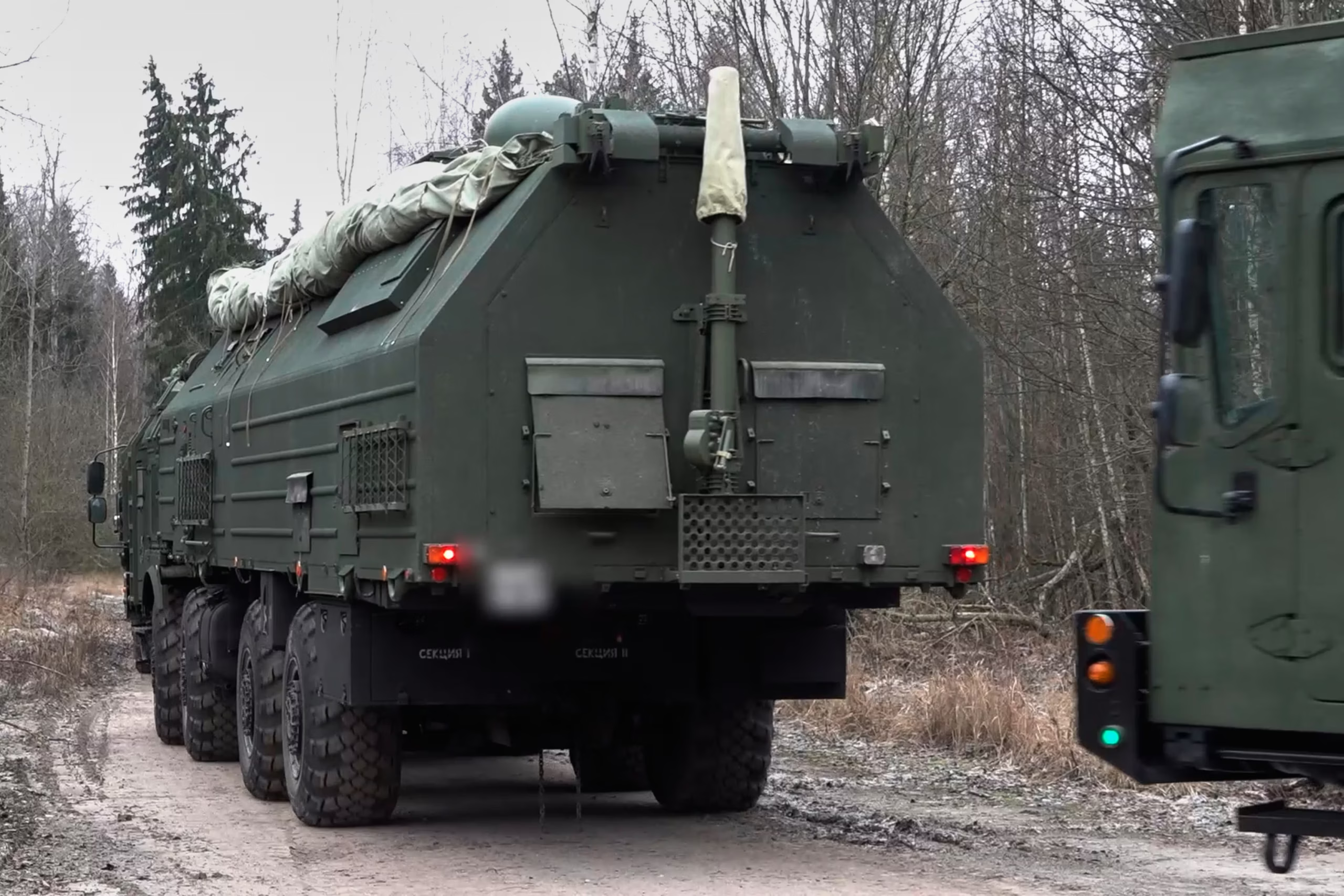
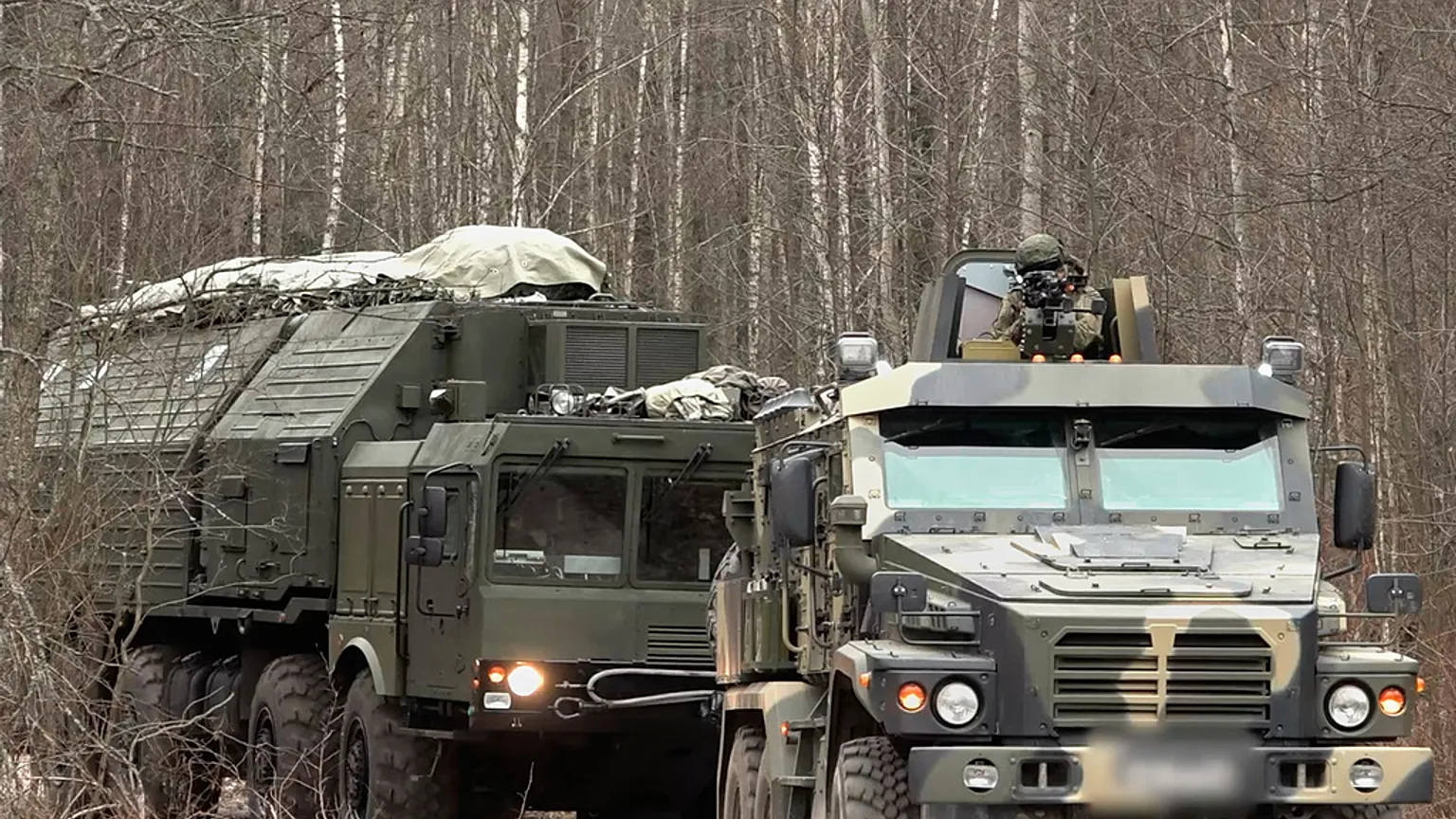
What’s going on now: In a notable development, Russia’s Defense Ministry released video footage confirming that the Oreshnik missile system has been placed on combat duty in Belarus. The footage showed Russian military vehicles transporting and positioning equipment in a Belarusian forest, accompanied by a flag-raising ceremony. The ministry stated that all necessary conditions for deployment, including facilities for launch, communications, power supply, and security, had been prepared in advance. It also emphasized that Russian crews stationed in Belarus had undergone retraining using modern simulators before entering operational status.
This announcement closely followed Belarusian President Alexander Lukashenko’s earlier statements confirming the arrival of the Oreshnik systems on December 17. He noted that up to ten systems would be stationed in the country under a security arrangement with Moscow. Lukashenko had previously requested the deployment of such weapons, citing heightened tensions due to NATO troops in neighboring Poland and Lithuania.
Russia has framed the deployment as a means of securing “strategic parity” and enhancing collective defense. Officials in Moscow argue that positioning the Oreshniks in Belarus is a necessary counterbalance to NATO’s expanding missile capabilities in Europe.
Related posts:
 Updates From Middle East
 Annual US Threat Assessment Says Russia Has ‘Upper Hand’ in Ukraine, Circumvents Sanctions via China & BRICS Nations
 US & Ukrainian Officials Say Russia May Be Preparing to Launch Another Experimental Ballistic Missile at Ukraine
 Top Belarusian Official Says Upcoming Military Drills with Russia Will Include Simulated Nuclear Strikes and Russia’s New “Oreshnik” Missile